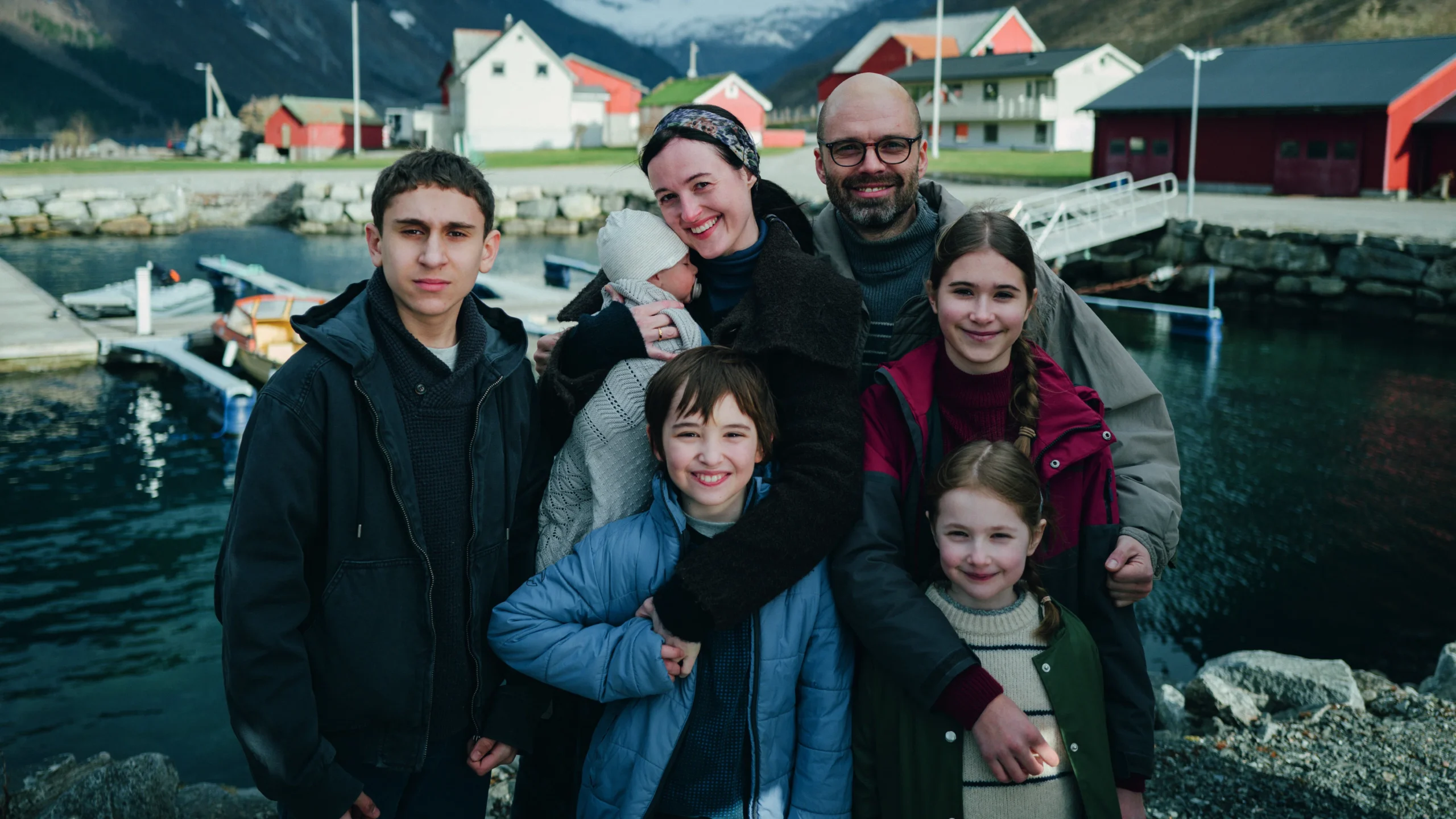
When Mihai and Lisbet Gheorghiu move to a new town with their children, they hope to settle in and build a life for their family. However, that sense of stability quickly unravels when concerns about their children’s well-being bring the family under scrutiny. As the situation escalates into a legal battle over the custody of their children, the Gheorghius find themselves confronting not only the Child Protective Services’ system, but also a community that has already begun making judgments about who they are based on their beliefs.
Fjord is an interesting film because it isn’t quite the movie I expected it to be. What begins as a story about a family trying to settle into a new town gradually develops into something much more complicated, examining how quickly circumstances can escalate when allegations of child abuse enter the picture.
At the center of the story are Mihai and Lisbet, a couple who moved from Romania to Norway and are simply trying to start the next chapter of their lives. It’s easy to feel sympathy for them as they attempt to find their footing in an unfamiliar community, especially as the situation surrounding their children becomes increasingly complicated. The film does a good job of putting the audience in a position where we are forced to question what is happening, how much of what we’re being told we should believe, and whether the people making decisions about this family truly understand them.

One of the most compelling aspects of Fjord is how it explores the transition into their new lives and offers a look at how the children handle the change, as well as the parents’. It also examines how quickly a situation involving children can spiral out of control. Allegations of abuse are incredibly serious, and the film doesn’t shy away from the importance of protecting children. At the same time, it asks us to consider what happens when concern for a child’s well-being becomes intertwined with assumptions, fear, and preconceived notions about the parents.
It becomes particularly interesting when the film turns its attention toward the Gheorghius’ religious beliefs. Their faith becomes another reason the community treats the family differently, and Fjord examines the consequences of judging people by those beliefs rather than seeing them as individuals.
As the story moves deeper into the family’s fight to get their children back, the film raises some uncomfortable questions about whether the decisions being made are truly centered on what is best for the children or whether the personal and religious opinions of the adults involved begin to outweigh that consideration.
That’s ultimately what made Fjord such an intriguing watch. The film doesn’t simply present a straightforward story about a family versus the system. Instead, it examines the gray areas where child welfare, cultural differences, religion, community perception, and the legal system collide.

At times, the story and pacing lagged, and it focused on characters or plot points that never followed through. Regardless, Fjord kept me on my toes as I kept questioning the motivations of the people involved. This movie makes you think about how easily a family can be defined by others’ perceptions.
At its core, Fjord is a film about preconceived notions and judgment, how quickly it can spread, and what can happen when those judgments become more important than understanding the people at the center of the situation. It’s an interesting and thought-provoking watch that leaves you with plenty to consider after the credits roll.