In Slanted, writer-director Amy Wang delivers a striking blend of dark satire, coming-of-age drama, and body horror to explore the complexities of identity, assimilation, and the pressure to belong.
The Pursuit of Acceptance—At Any Cost
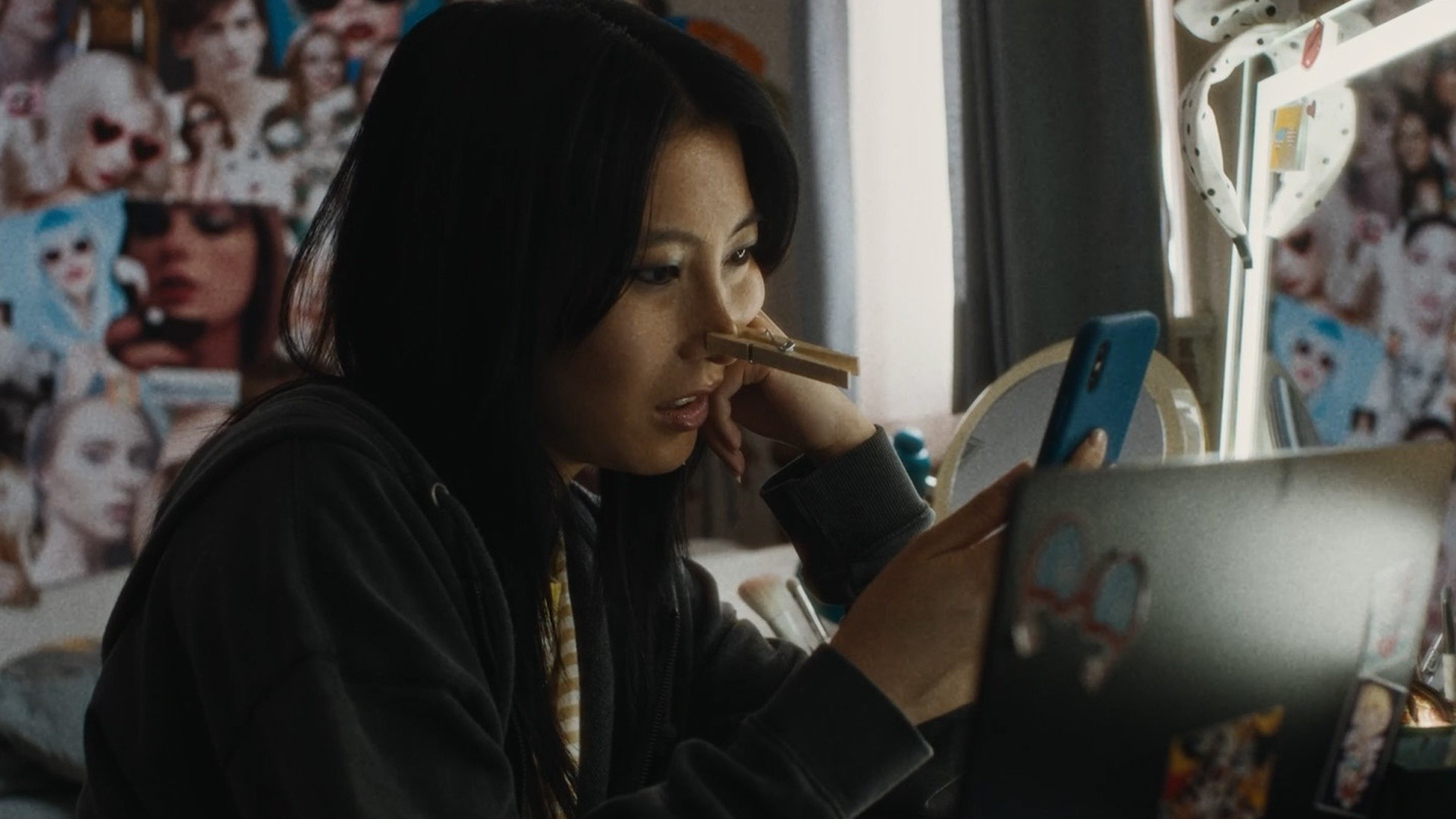
The film follows Joan Huang (Shirley Chen), a high school senior who equates winning prom queen with achieving the ultimate form of acceptance into the American life. To her, popularity, beauty, and success are embodied in one specific image—one that doesn’t look like her.
Desperate to fit in, Joan makes a shocking decision: she undergoes an experimental procedure that transforms her into a white version of herself. What begins as a dream quickly spirals into something far more disturbing—both emotionally and physically.
A Personal Story Wrapped in Satire
From the start, Slanted feels deeply personal. Amy Wang uses heightened satire and with a side of sci-fi body horror to reflect very real experiences—particularly those tied to the Asian immigrant identity.
Through Joan’s journey, the film explores the subtle and overt pressures to conform: from beauty standards shaped by media to the everyday desire to simply “fit in.” While the central transformation is fictional, the emotions behind it are anything but.
“Mean Girls” with a Dark Twist
The film cleverly incorporates recognizable high school tropes, including the “popular girl” archetype. Olivia, played by Amelie Zilber, channels strong Regina George energy—complete with her clique of friends and an entrance that commands attention.
These moments ground the film in a familiar teen movie structure, but Slanted quickly subverts expectations by pushing its themes into much darker territory.
Identity, Family, and Cultural Tension
One of the film’s most impactful elements comes after Joan’s transformation, when she must confront her parents now looking like a completely different person. The role of Joan is taken over by McKenna Grace who goes by Jo Hunt. These scenes are emotionally charged, highlighting a painful disconnect between her desire to assimilate and her parents’ insistence that her identity is something to be embraced, not erased.
The film captures a universal experience for many children of immigrants: the tension between honoring one’s roots and navigating the pressures of fitting into a dominant culture.
Interview with director Amy Wang, and stars Maitreyi Ramakrishnan and Amelie Zilber
Satire Meets Body Horror
While Slanted has been compared to films like Mean Girls and The Substance, its use of body horror is more restrained than some audiences might expect. The marketing may suggest a more intense physical transformation, but the film leans more heavily into psychological and emotional consequences.
That said, the horror elements are effective in reinforcing the film’s central message: what does it really cost to change who you are?
A Visually Distinctive Experience
Another standout aspect is the film’s visual style. The shifting aspect ratio adds an extra layer of storytelling, subtly reflecting Joan’s internal transformation and the changing world around her. It’s a creative choice that enhances the viewing experience without feeling gimmicky.
Final Thoughts
Slanted is not a subtle film—and that’s exactly the point. Its bold premise and genre-blending approach won’t resonate with everyone, but it succeeds in sparking conversation.
By taking a deeply personal experience and amplifying it through satire and horror, Amy Wang creates a film that is both thought-provoking and unsettling. It challenges viewers to reflect on identity, acceptance, and the societal pressures that shape how we see ourselves.